Should All of Humanity Care About AI?
- No.
- 175
- Date
- Read
- 5 min
- Words
- 1,130
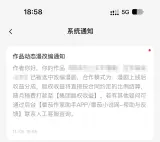
I came across a post on Xiaohongshu titled "The most efficient life is one that ends at birth." In the caption, the author wrote that human creation is being replaced by AI, human opinions are being summarized by AI, and the parts that once belonged to people are being taken over.
From the post, I could roughly make out a few points:
1. AI has pushed humanity's pursuit of efficiency to its peak.
2. Chasing efficiency drowns out the essence of human life.
3. The essence of human life is experiencing life, including but not limited to creating, thinking, and living.
I think the poster's thinking is common in today's AI circles. People like this insist on keeping their own thinking and want to keep AI out of what they see as the essence of their lives.
As I see it, that's wrong. At its root, this way of thinking comes from how you understand the relationship between people and AI.
How you see the relationship between yourself and AI, and between humanity and AI, decides what attitude you hold toward AI.
I wrote a post before where I said I think the relationship between people and AI is the relationship between a farmer and a hoe. In that picture, I'm the farmer and AI is the hoe. But it could also be a tiller, or a combine harvester. The only difference between them is productive efficiency.
Speaking of productive efficiency, does raising it alienate people from their own lives? My answer is: did farmers panic when combine harvesters appeared?
I was a farmer as a kid. I grew up with my maternal grandparents.
I saw with my own eyes how harvesting rice went from manual labor to small machines and finally to big combine harvesters. Did farmers lose the experience of life because they no longer had to go into the paddies and thresh rice?
Obviously not. Better tools of production raised productivity and freed up farmers' hands. For people like my grandparents, who farmed their whole lives, the biggest benefit of the combine harvester was adding a little free time to their lives.
Sure, they didn't have to thresh rice in the paddies anymore. But the strength and labor they saved could go into drying the grain, turning the grain, and gathering it up at the same time.
In the end, there's always some time freed up. And that time either goes to rest, or to things they want to do.
So is AI the same kind of thing as a combine harvester? I think it goes even further.
Before combine harvesters, we could harvest rice in other ways. The only difference was a huge gap in efficiency. But before AI, there were many things we wouldn't even dare to imagine.
For example, before AI, would someone who knows nothing about code have imagined they could create a piece of software from a simple idea? I certainly never had.
That's what makes AI revolutionary. It doesn't just raise efficiency. It brings endless possibilities to the world.
But AI is like the combine harvester. It raises efficiency and saves labor, but to get those things, we have to give something in return. From where we stand today, that means spending money.
Take threshing rice. With the most primitive manual method, if you wanted to finish in a few days, your family had to ask people in the village to come help. That's essentially hiring labor to raise productive efficiency.
So you can see that if you want a clear gain in efficiency, you have to pay money for the labor it takes.
AI is the same. Most chat AIs in China are free right now, but the efficiency gains they can bring are extremely limited.
Right now, for example, the only Chinese AI app I use is Doubao, and only for questions about everyday life.
For work, I use agents like Codex and Claude Code heavily. All of these AIs cost money. The cheapest subscription is 20 US dollars a month.
So even if AI does drown out the essence of life, that problem only shows up for people paying at least 20 dollars a month. If free AI alone is enough to drown out the essence of your life, then there's really nothing to be done.
So my first conclusion is this: any thinking about the relationship between AI and a person, or humanity, has to be built on really understanding and using AI.
If AI barely plays a part in your life, what gives you the right to worry about AI's relationship with all of humanity on their behalf?
Now let's talk about how many people actually use AI heavily every day.
According to Pew Research Center survey data from 2025, only 31% of American adults use AI frequently every day.
And that's in the US, where AI technology is most advanced. What about China? What would that number look like there? The fact is, far fewer people use AI than we imagine.
The so-called relationship between AI and humanity is really just a small group of AI users holding all of humanity hostage emotionally and spreading anxiety.
It's like telling someone the whole universe will be destroyed if McDonald's stops selling Spicy Chicken Wings, and they tell you: "I never eat Spicy Chicken Wings."
So my second conclusion is this: the anxieties and big questions about AI are just the feelings of the small group of people who use it. In reality, they have nothing to do with all of humanity.
Now back to the title. Does all of humanity need to care about AI?
My answer is yes.
But if you change the question to "Does all of humanity need to use AI?" then my answer is no.
Why? Because you can't hand a hoe to just anyone. You can only hand it to people who need a hoe.
Then why care about it? Because only by paying attention can you understand it, and know what it can do and how it can help you.
Note that by paying attention I don't mean just watching. I mean making some basic attempts, even if it's just opening Doubao and asking what the weather will be tomorrow.
Only then can you gradually understand what AI can do in your own hands.
If it's not much use, then just leave it alone.
If AI exists, the world exists. If AI doesn't exist, the world still exists.
For human society, AI may make waves and bring huge change. But for the universe as a whole, today's AI is still just a drop in the ocean.
The same goes for us.
So let go of the anxiety you don't need. Stop second-guessing, and just do what you think is right.